Article
Preventing and Addressing Water Damage in Condo and HOA Communities: Guide for Board Members
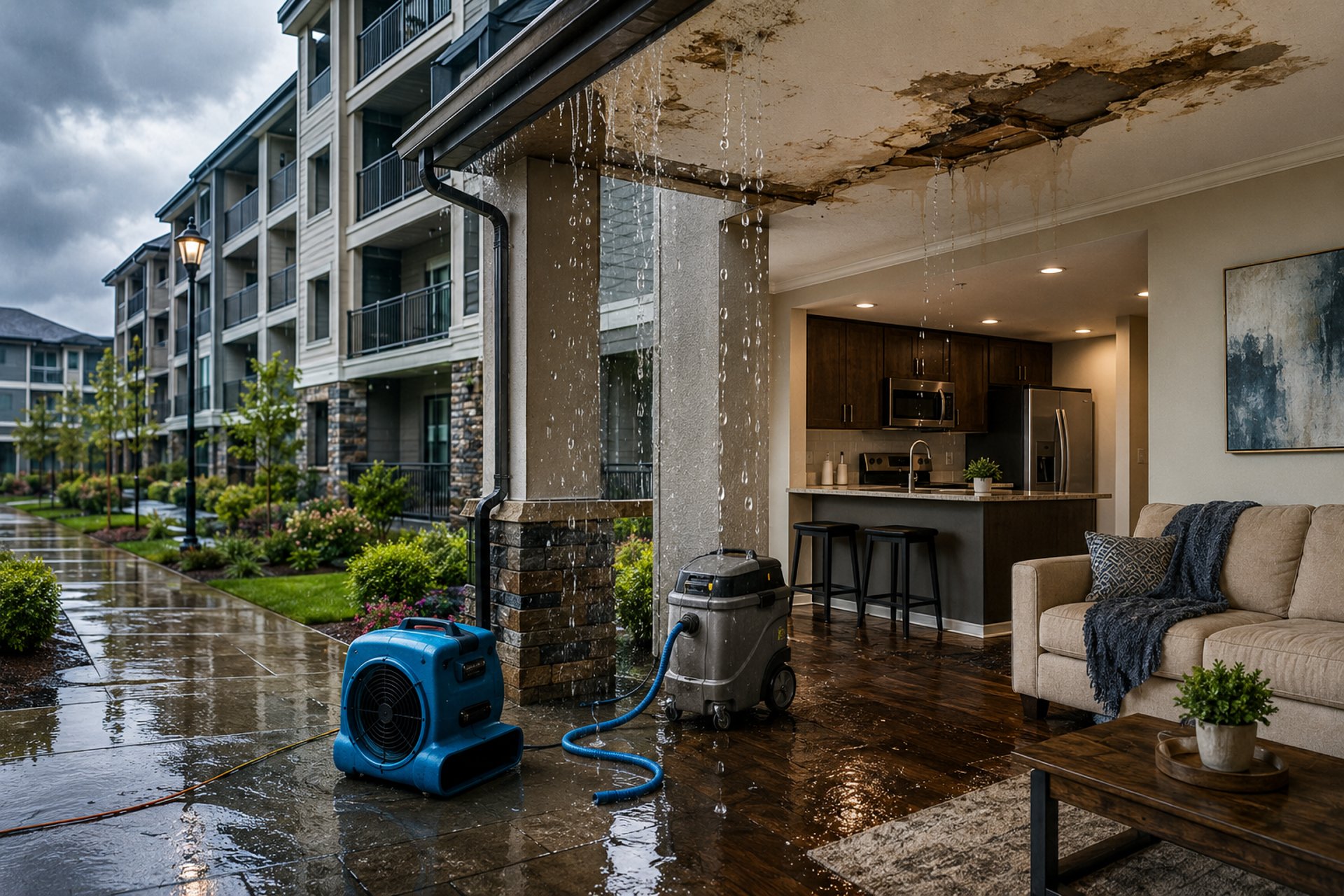
Water damage is one of the most persistent and costly issues that condo and HOA communities face. Whether caused by leaky pipes, heavy rainfall, or common area maintenance problems, water intrusion can create havoc, damaging everything from drywall to flooring, and even furniture within individual units. For condo and HOA boards, understanding the maintenance and repair responsibilities around water damage is critical to effectively managing these challenges.
In this comprehensive guide, we’ll break down the key aspects of dealing with water damage in your condo or HOA. Drawing on real-world examples and insights from building management expert Lance Luke, we’ll help clarify the responsibilities of the association and its homeowners, as well as how to navigate the often murky waters of insurance and repairs.
Understanding Maintenance and Repair Responsibilities
Water damage issues often arise from common areas that extend into individual units, but determining who is responsible for what can be confusing. Condo and HOA governing documents may not always be clear, leaving many boards unsure of their obligations.
Step 1: Review Governing Documents Your governing documents (such as the declaration, bylaws, and CC&Rs) are your first resource when determining maintenance and repair responsibilities. These documents often outline which areas the association is responsible for and which areas fall under individual homeowners' duties. It’s essential to check the provisions related to common areas, building components, and the scope of the association's responsibilities to maintain those components.
In the case of water damage, look for provisions that specify whether the association is responsible for maintaining the roof, pipes, or exterior walls. If these systems are part of the common area, the HOA may be responsible for maintaining them and ensuring they’re watertight.
Step 2: Clarify Repair Responsibilities Once a water damage issue is identified, determining who is responsible for fixing the damage is crucial. This often depends on the source of the problem. For example, if water from a common area leaks into a unit, the association may be responsible for repairs to the common area that caused the issue, but the homeowner may need to cover repairs inside their unit.
However, in some cases, the governing documents may not clearly define responsibility for repairs. In such situations, the HOA board may need to take action to amend the documents to clarify the responsibilities. This can help prevent misunderstandings and disputes in the future.
Step 3: Establish Immediate Steps to Contain Damage When water damage occurs, immediate action is required. Owners, board members, and maintenance staff must act quickly to contain the water and prevent further damage. Depending on the severity of the situation, this may involve shutting off the water supply, placing tarps or plastic sheets over affected areas, or calling in emergency restoration services.
Communication is key at this stage. Homeowners need to be informed about the steps they need to take to prevent additional damage and how the association is addressing the situation.
Navigating Insurance for Water Damage Repairs
Step 4: Understand Insurance Coverage Both homeowners and the association need to understand the types of insurance that cover water damage. Typically, the association’s master policy will cover damage to common areas, while individual homeowners' policies will cover their personal property and the interior of their units.
When dealing with water damage, understanding the specifics of these policies—such as exclusions and limits on water damage coverage—is essential. For example, if the cause of the water damage is a burst pipe in a common area, the association’s insurance may cover the cost of repairs to the pipe, but the homeowner’s insurance might be needed to cover the damages within their unit.
Step 5: Who Pays for the Repairs? The question of who pays for repairs can get complicated, especially if there is ambiguity in the governing documents. In some cases, the association may be able to charge the homeowner for repairs, particularly if the damage is due to the homeowner’s negligence or failure to maintain their unit. In other cases, the association may be required to cover the costs of repairs, with the homeowner responsible for their deductible.
Understanding how costs are shared and how they are assessed is key to minimizing disputes. Proper documentation, including clear guidelines on cost-sharing, can prevent confusion and tension during an already stressful situation.
Amending Governing Documents for Clarity
Step 6: Make Document Amendments If your community’s governing documents do not clearly outline responsibilities regarding water damage, it may be time to consider amending them. Provisions that allow only the association to handle repairs—while assessing the costs back to homeowners—can create clarity, but they should be carefully worded to ensure fairness and transparency.
Consulting with legal professionals who specialize in HOA and condo law is a smart move to ensure any amendments are enforceable and fair to both the association and homeowners.
Tips for Effective Water Damage Prevention
Step 7: Preventive Measures Preventing water damage in the first place can save your HOA and homeowners from costly repairs and disputes. Regular maintenance, including inspections of roofing, plumbing, and common area structures, is essential. Encourage homeowners to report leaks or potential issues in their units immediately to prevent small problems from turning into large disasters.
Education is also critical. Hosting annual meetings or distributing informative materials about water damage prevention can help homeowners take the necessary steps to protect their units.
Conclusion
Managing water damage in condo and HOA communities can be challenging, but with clear documentation, swift action, and proper insurance coverage, it’s possible to minimize the impact of water-related incidents. By reviewing and clarifying responsibilities, educating homeowners, and maintaining regular inspections, boards can help ensure that water damage doesn’t become a larger, more expensive problem.
For more insights into managing maintenance issues and preventing common property damage, check out Lance Luke's work on construction management at https://hawaiibuildingexpert.com/ and best practices in property upkeep. By following these steps and leveraging expert advice, you can avoid the confusion and tension that often accompanies water damage in condo and HOA communities.